The funeral profession is in danger of turning “green” into a marketing label rather than a meaningful category - and most directors know it, even if they haven't said it out loud yet. Biodegradable coffins shipped from the other side of the world. “Eco-friendly” services that differ from conventional ones only in the coffin used. Vague environmental messaging designed to make families feel responsible without changing anything substantive about the funeral itself.
If the profession doesn't get honest about what “green” actually means in a funeral context - and what it doesn't - it will lose credibility on the one trend that could genuinely differentiate independent funeral directors from the rest.
The Demand Is Real, but Understanding Is Shallow
Consumer interest in green funerals is genuine and growing. Surveys consistently show over 50% of adults expressing interest in environmentally friendly funeral options. That figure has climbed steadily over the past decade, and among younger generations making pre-need enquiries, it's higher still. Directors are hearing the question more often at arrangement meetings: What's the green option?
But “interest” and “understanding” are different things. Most families asking about green funerals don't know the difference between a natural green burial and a cremation in a biodegradable coffin. They don't know that a standard flame cremation produces approximately 320kg of CO2 regardless of whether the coffin is oak or willow. They don't know that the coffin accounts for a relatively small proportion of cremation's total environmental impact - the energy required to sustain temperatures above 800°C for over an hour is the dominant factor.
Families are asking the right question. They're rarely getting a complete answer. For a balanced comparison of the main options, see our guide to green burial vs. cremation. And the marketing materials many directors hand them aren't helping - because those materials are designed to sell coffins, not explain environmental impact.
The Supply Chain Problem Nobody Talks About
Here's where the green funerals conversation gets uncomfortable. A wicker coffin manufactured overseas and shipped to the UK or Ireland may carry a larger carbon footprint than a wooden coffin made by a joiner twenty miles down the road. Bamboo coffins - marketed as highly sustainable because bamboo grows quickly - are almost exclusively manufactured in Asia. By the time one reaches a funeral home in Cork or Cardiff, it has travelled thousands of miles by container ship, then by road freight.
“Biodegradable” is not a regulated term in the funeral context. Everything biodegrades eventually - the question is how quickly, under what conditions, and whether it matters in context. A cardboard coffin that biodegrades in a landfill-style environment performs differently in the clay-heavy soil of a burial ground. A biodegradable coffin cremated at 850°C is converted to the same ash and emissions as any other combustible material.
Directors need to interrogate their suppliers, not just their suppliers' marketing. Where was this coffin manufactured? What's the total transport chain? What specific environmental claim is being made, and is it substantiated? These are reasonable due-diligence questions, not hostile ones - the same diligence applied to any other product sold to bereaved families.
What's Genuinely Lower-Impact - and How Available Is It?
Two options stand out as genuinely and significantly lower-impact than conventional cremation or burial.
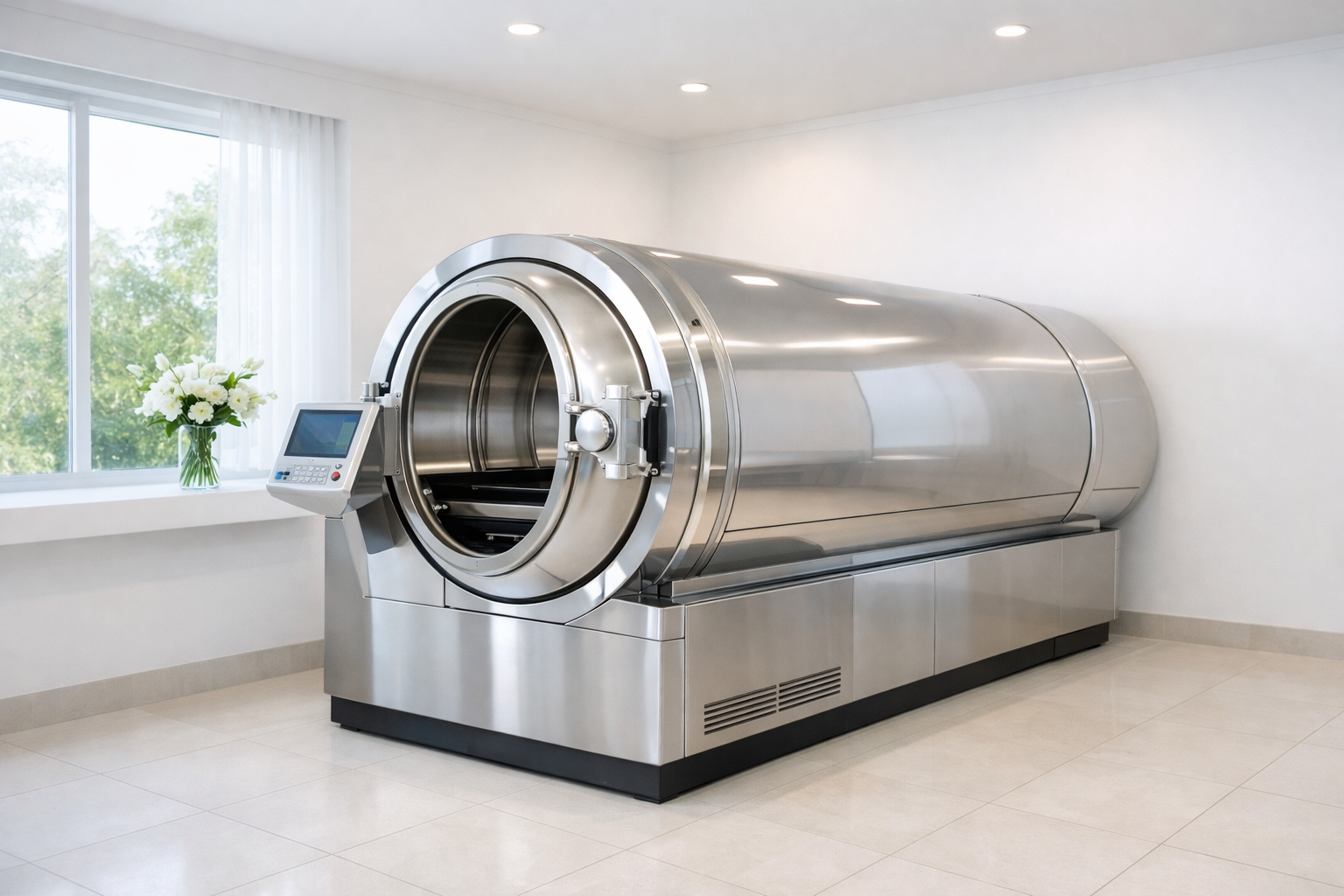
Water cremation (resomation) produces approximately 28kg of CO2 per process - compared to roughly 320kg for flame cremation. That's an order-of-magnitude reduction, far beyond a marginal improvement. But water cremation is available at exactly one facility in Ireland (Pure Reflections in Navan) and became legal in Scotland only in March 2026. It remains unavailable in England and Wales, where legislation hasn't yet caught up. A fuller exploration of water cremation and its current status is available separately.
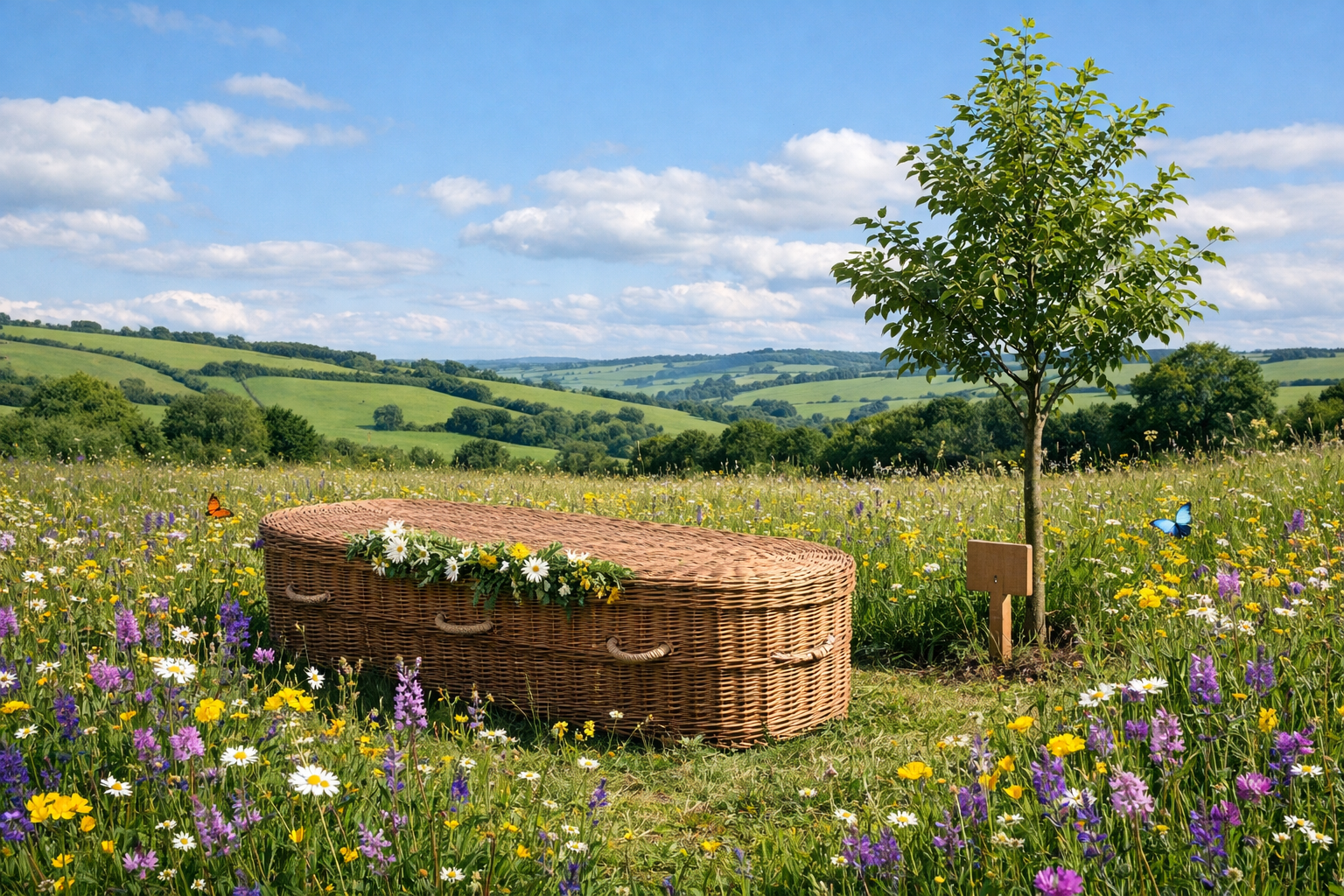
Natural burial - interment in a biodegradable coffin or shroud in a designated natural burial ground, without embalming - is genuinely low-impact. No combustion, no emissions, no energy-intensive process. But natural burial sites are geographically limited. The Natural Death Centre lists over 270 across the UK, but distribution is uneven, and in Ireland dedicated sites remain scarce.
The “green” options most widely available to most families - primarily biodegradable coffins used in standard flame cremation - make a marginal environmental difference at best. They're not nothing. But they're not what the marketing implies.
The Greenwashing Risk
This is where the profession's credibility is on the line. Marketing “green funerals” that aren't meaningfully different from conventional ones creates cynicism among exactly the families the profession should be building trust with - the engaged, values-driven families who research their choices and compare claims against reality.
A family that pays a premium for a “green funeral package” and later learns it amounted to a willow coffin in a standard cremation - with no measurable reduction in environmental impact - won't feel good about that funeral home. They'll feel misled. And they'll tell others, particularly online, where a single honest review carries more weight than a year of marketing.
Green marketing that overpromises and underdelivers doesn't just hurt the individual firm. It poisons the well for every director genuinely trying to offer lower-impact options. When “green” means everything, it means nothing.
The Counterargument: Don't Let Perfect Be the Enemy of Good
A fair objection: any step toward sustainability is better than none. Choosing a wicker coffin over a hardwood casket with metal handles is a real choice - less material, less mining, less manufacturing energy, even if the coffin itself is shipped from overseas. Incremental improvement matters. Families who choose a biodegradable coffin are thinking about their impact, and that thinking, encouraged and supported, can lead to more significant choices over time.
Take this seriously, because it's right - as far as it goes. Perfectionism that dismisses every option short of zero-impact would leave directors with nothing to offer most families. Progress happens in steps.
But - and this is the crux - incremental improvement should be communicated honestly, not dressed up as transformation. A wicker coffin in a standard cremation is a small, positive choice. It is not an “eco-friendly funeral.” Calling it one sets expectations the product can't meet. Honest language would be: This coffin is made from renewable materials and requires less manufacturing energy than a traditional alternative. The cremation process itself remains the same. That's accurate, respectful of the family's values, and doesn't create a trust gap.
Where This Leaves Directors
Directors should offer green options - absolutely, without hesitation. Families want them, the direction of travel is clear, and genuine low-impact alternatives deserve support and promotion.
But offer them honestly. Explain what the environmental impact actually is, not what the brochure implies. Be specific about trade-offs: a wicker coffin is a better material choice, but the cremation itself is the dominant environmental factor. When families ask, explaining options without sounding like a sales pitch builds the trust that green marketing alone cannot. Be clear about where genuinely lower-impact options sit - natural burial, water cremation - and be frank about their current limitations in availability and geography.
Most families will respect the honesty. The ones who care enough to ask about green funerals are exactly the ones who will appreciate a director who gives them real information rather than marketing language. They're also the families most likely to recommend a funeral home they trust - and a director who told them the truth about environmental impact, even when the truth was complicated, is a director they'll trust.
The bottom line
Honesty about green funerals builds more trust than any greenwashed brochure ever printed. And trust - not a product line, not a marketing angle, not a biodegradable coffin range - is the only competitive advantage that compounds over time.