She's in her mid-fifties and her voice is steady but uncertain. Her father died three weeks ago. Direct cremation - his choice, really. He was a practical man. Didn't want a fuss, didn't want people standing around in black feeling obliged. The family respected that. They arranged a direct cremation through a national provider, collected the ashes, and placed them on the mantelpiece.
Now she's calling a local funeral director she found online. Not because anything went wrong. Because something feels missing.
"We thought we didn't need a funeral," she says. "Now I think we might."
Directors across the UK and Ireland are receiving this call more often. As direct cremation approaches 20% of the market, the number of families circling back - weeks or months later, ashes in hand, looking for something they can't quite name - is growing steadily. A memorial after direct cremation is becoming one of the most common requests independent directors handle. Understanding how to respond well is both a professional skill and a genuine service to grieving families.
The Gap Between Decision and Experience
Many families choose direct cremation with complete confidence. The reasoning is sound: the person didn't want a traditional funeral, the cost saving is significant (£1,628 average versus £3,828 for an attended funeral, per SunLife), and the whole process feels aligned with how the deceased lived. No drama. No performance. Dignified simplicity.
But grief doesn't follow a purchase decision. It follows its own schedule, and it often arrives after the practical tasks are finished - after the phone calls, the paperwork, the admin of death. Families who felt certain during the arrangement conversation find themselves, a fortnight later, sitting in a quiet house with an urn on a shelf and no shared moment to anchor their loss.
Nobody gathered. Nobody spoke about him. Nobody said his name out loud in a room full of people who loved him. The absence of a communal moment catches families off guard, and it can feel surprisingly heavy.
None of this is an argument against direct cremation. Separating disposition from memorial is entirely valid - it's how many cultures have operated for centuries. But separating them requires intentionality. Someone needs to think about the memorial part, and most families choosing direct cremation haven't been guided to do that. National providers handle the cremation efficiently. What happens after is left to the family, and "we'll figure something out later" often becomes "we never quite got round to it."
Meeting the Family Where They Are
Back to our caller. The director invites her in - or offers to visit the family home, whichever she prefers. She comes to the funeral home with her brother. They sit down and the director asks a simple question: "Tell me about your dad."
He was an engineer. Loved jazz. Read the paper every morning cover to cover with two sugars in his tea. Had a dry sense of humour that could catch you off guard. Coached the local youth rugby team for fifteen years. Never missed a Saturday match, even after his knees gave out and he had to watch from the car.
They don't want a formal funeral - their father genuinely would have hated that. But they want something. A shape. A moment where the family is together and his name is spoken.
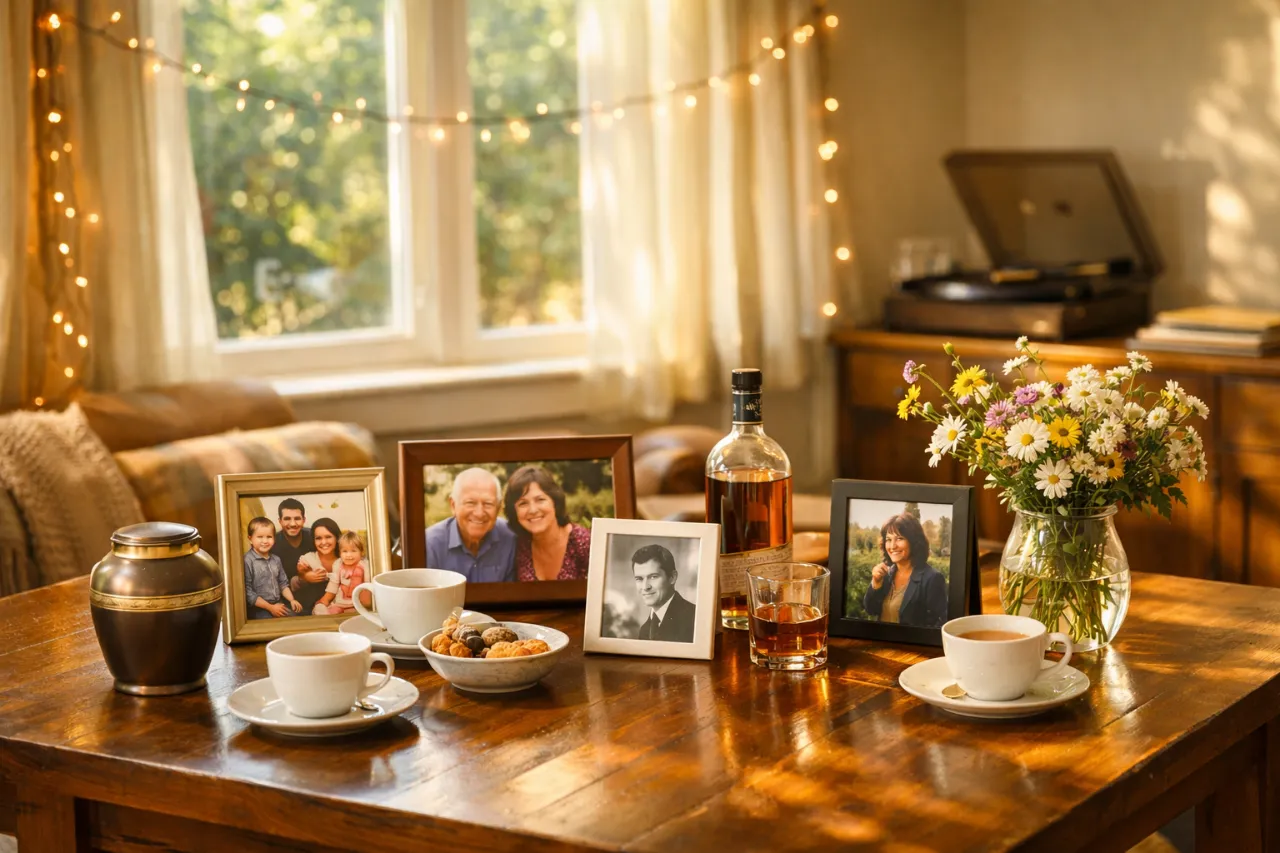
Together, they plan a gathering at the family home. His favourite Chet Baker album playing in the background. Photos arranged on the dining table - not a formal display, just snapshots pulled from drawers and phone galleries. Each of his three children will say a few words. Nothing scripted, nothing polished. A toast with Jameson, his preferred whiskey. The director suggests a loose structure: music first, then the spoken tributes, then the toast, then people simply being together. Shape without formality. Ceremony without feeling like one.
The director offers to help coordinate timing with extended family, suggests having a printed order of the gathering so people know what to expect, and offers to be present on the day if the family would like a steady hand in the room. They accept.
Practical Memorial Options Worth Knowing
Every family's version of "something meaningful" looks different. Directors who handle post-cremation memorial enquiries well keep a mental (or actual) list of realistic options, each with practical considerations families won't have thought about.
Private gathering at home or a meaningful location
A pub the deceased loved, a park, a garden, a beach. Home gatherings are simplest logistically. For other locations, check whether you need permission from the landowner or local authority. Weather contingency matters for outdoor plans - have a backup or accept the British weather as part of the experience.
Memorial service at a venue
Funeral home chapel, church, community hall, hotel function room - weeks or months after the cremation. Booking lead time varies. If music will be played, venues with a PRS/PPL licence avoid complications. A celebrant or family member can lead. There's no legal requirement for any particular structure.
Ash scattering ceremony
At a chosen location, with or without a structured tribute. For scattering on private land, landowner permission is needed. Public land and waterways have specific rules - Natural England, Natural Resources Wales, and SEPA in Scotland each have guidance. Ask families to check wind direction on the day. Scattering can be the centrepiece of a gathering or a quiet, private moment - both are valid.
Ash interment
At a cemetery, churchyard, or natural burial ground with a graveside gathering. Cemetery fees vary widely - expect £200–£800 depending on location and whether a new plot is purchased. Some natural burial grounds allow tree planting above interred ashes, combining interment with a living memorial. Check the specific ground's rules on containers; many require biodegradable urns.
Lasting physical memorial
A tree planted with ashes in a memorial woodland. A bench in a favourite park (council waiting lists can be long - apply early). A donation to a cause the person cared about, sometimes with a plaque or named fund. Memorial jewellery incorporating a small portion of ashes. Each carries different costs and timelines - be ready with realistic information rather than vague suggestions.
Virtual memorial for dispersed families
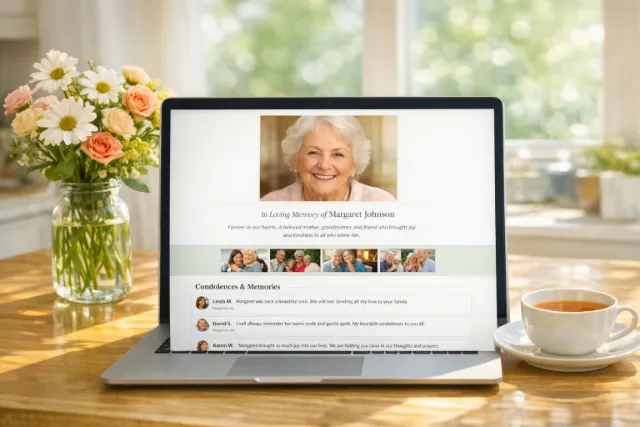
Video tribute shared online, a memorial webpage where people can post memories and photos, a scheduled video call where family and friends gather remotely. Particularly relevant for Irish and UK families with relatives in Australia, the US, or Canada. Several platforms exist for permanent online memorials - tribute and obituary pages can serve this function well.
For every option, the director's value lies in practical knowledge. Knowing what permissions are needed, what costs to expect, what goes wrong, and what makes the difference between a gathering that feels meaningful and one that feels awkward. Families don't have this knowledge. Directors do.
The Role National Providers Can't Fill
Here is where the professional opportunity sits, and it deserves honest acknowledgement.
Pure Cremation, Distinct Cremations, and similar national operators handle the cremation itself competently and affordably. That's their model, and it works. What they don't offer - and aren't structured to offer - is what happens next. No local presence. No one to sit with a family and help them think through what a memorial might look like. No one to stand in the corner of a living room while a daughter reads a shaky tribute to her father and make sure the moment holds.
For independent funeral directors, this is the space direct cremation opens up rather than closes off. Families who chose a national provider because they believed they didn't need a funeral director discover, weeks later, that they do - just not for the cremation. They need someone for the meaning.
Directors who market memorial planning as a standalone service - visible on their website, mentioned in their Google Business profile, priced transparently - will hear from these families. Those who assume direct cremation families are lost forever won't. A memorial consultation, a gathering coordination package, an ash scattering ceremony: these are real services with real value. Pricing them fairly and offering them clearly meets a genuine need that no one else in the market is consistently filling.
Opportunity for directors
List memorial planning as a standalone service on your website. Include it in your Google Business profile. Families searching for help after direct cremation need to find you - make sure they can.
What Happened Next
The gathering takes place on a Saturday afternoon. Twelve people in a warm kitchen. Chet Baker on the speaker. Photos spread across the table prompt stories nobody expected - his first car, the rugby tour to Wales in 1987, the time he fixed the boiler with a paperclip and electrical tape.
Each child speaks. The eldest is brief and funny. The middle child reads something she wrote that morning. The youngest raises a glass and says simply, "He was the best of us." They laugh more than they cry, which is exactly what their father would have wanted.
The ashes are scattered in the back garden the following weekend. Just the three siblings, early morning, no ceremony. They plant a rose bush above the spot.
The daughter calls the director on Monday. "Thank you," she says. "That was exactly what he would have wanted. We just didn't know how to get there on our own."
Direct cremation was not the end of the director's involvement with this family. It was the beginning of a different kind of service - quieter, more personal, built around a need the family didn't know they had until they had it. For directors willing to listen for that call and respond with skill and warmth, the work is there. It always has been.