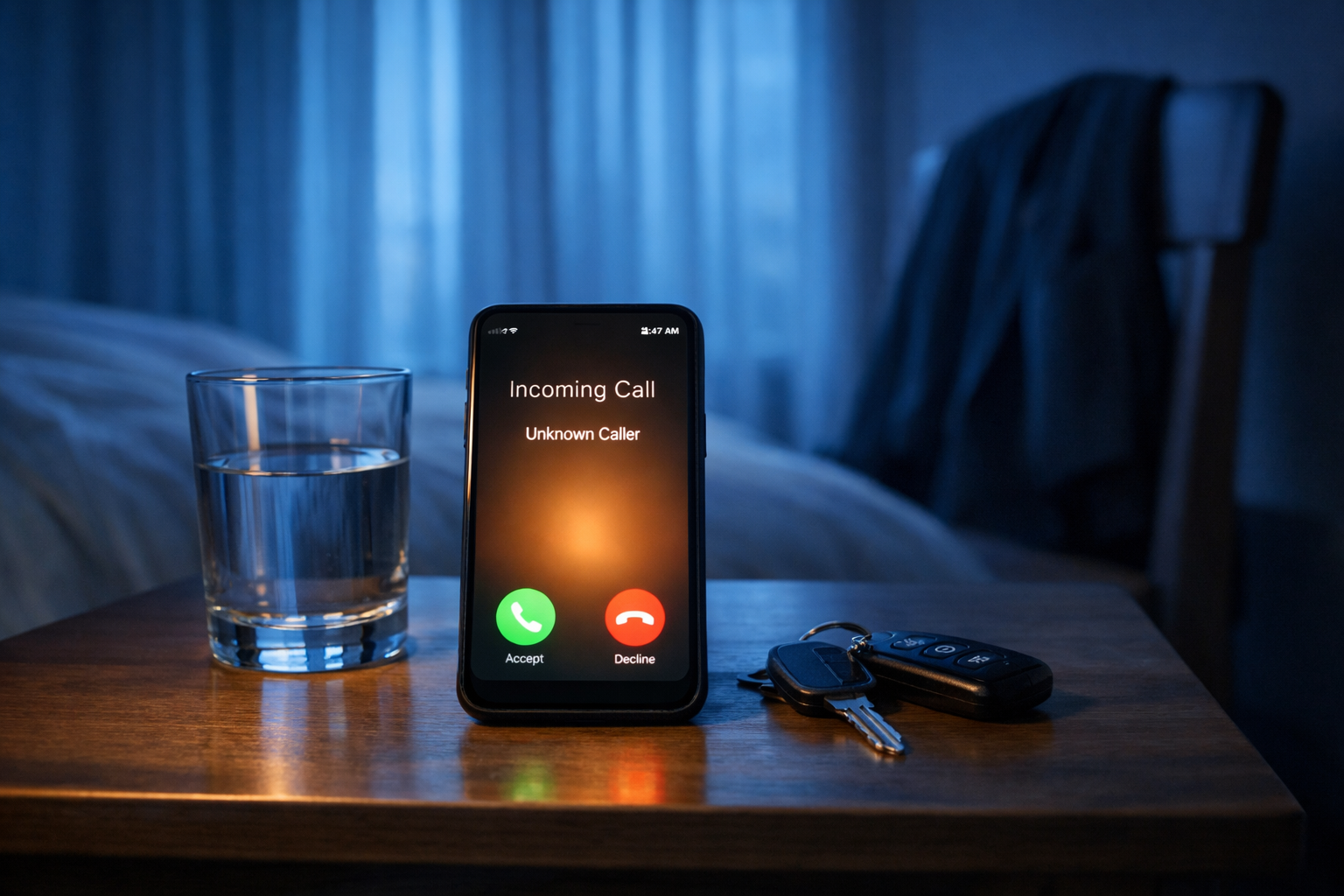
2:47am, Tuesday
The phone rings. A nursing home - resident passed forty minutes ago, family want her moved tonight. The funeral director on-call gets dressed, drives forty minutes through empty roads, handles the transfer, speaks with the night nurse, calls the family to confirm their mother is in care.
Back in bed by 4:30am. Alarm set for 7:00am. Two arrangement meetings and a service today. He’s covering three nights this week because a colleague is on leave. Tomorrow night will probably be quiet. Probably.
Every funeral director reading this has lived some version of that Tuesday. The 3am call isn’t the problem. The problem is what happens around it - the accumulation, the lack of recovery, the expectation that you’ll function at full capacity on fragments of sleep. The funeral director on-call system, in most independent homes, isn’t a system at all. It’s whatever arrangement emerged ten years ago and never got reviewed.
The Structural Problem Nobody Talks About
On-call isn’t “occasionally working at night.” In smaller homes, the same person covers nights and weekends for weeks at a stretch. In rural areas across Ireland and parts of Scotland and Wales, the on-call director might be the only member of staff. One person. Every night. Every weekend. Every bank holiday.
The profession has normalised chronic sleep disruption in a way that would be unthinkable in medicine or transport - industries where we recognise that exhaustion kills. Funeral service doesn’t have the same immediate physical risks, but the data is clear: PTSD rates among funeral professionals run roughly 20% higher than the general population. A full 32% of directors cite compassion fatigue as their top professional challenge. Those numbers describe people working in conditions that grind anyone down, not people who are weak.
Sleep deprivation compounds grief exposure. A well-rested director absorbing a family’s distress at 3am recovers. A director on their fifth consecutive night, running on four hours’ sleep, absorbs the same distress and has nothing left to process it with. For more on the mental health pressures facing funeral professionals, see our earlier post: The Mental Health Crisis in Funeral Service.
The reason most homes haven’t fixed this is simple: it’s always been this way.
Wednesday, 1:15am
Another call. Home death this time - a man in his seventies, wife and adult daughter present, both distraught. The transfer takes longer because the family need to talk, need reassurance, need someone to tell them what happens next. The director sits with them for twenty minutes before beginning. Gets the deceased back to the funeral home by 2:40am. Writes up brief notes on a scrap of paper, texts the office manager, sets the alarm for 6:45am.
Wednesday’s arrangement meetings go fine. Muscle memory carries a lot. But by Thursday, when he’s asked to cover a colleague’s afternoon service because the colleague’s car broke down, something shifts. Concentration starts slipping. He forgets to confirm a crematorium time. Has to ring back.
By Friday, the families he meets get a slightly less attentive version of him. Not a negligent version - he’d never let it reach that point. But the pauses before he finds the right word are longer. The warmth is still there, but it takes more effort to access. He’s running on obligation, not energy.
Nobody complains. Nobody notices, probably. But the director notices.
What On-Call Degrades (and Why It Matters)
On-call rarely causes outright negligence. What it causes is erosion. Families don’t get a bad director - they get a diminished one. Responses slightly slower. Emotional range slightly narrower. Creativity in arrangement meetings slightly flatter.
Multiply that across weeks and months, and what you have is a funeral home operating below its own standards without anyone being able to point to a single failing. Service quality doesn’t collapse. It subsides, slowly, and everyone adjusts to the new normal.
Meanwhile, the staff who carry the heaviest on-call burden build resentment - not always consciously, but enough to affect retention. When they leave, the exit interview (if there is one) cites “work-life balance.” The owner nods and hires a replacement, who inherits the same rota.
Building a Sustainable On-Call System
None of this is inevitable. On-call is a reality of funeral service that isn’t going away, but how it’s structured is entirely within a funeral home’s control. Here are the components that actually work.
Rota Design
A minimum of two people sharing the on-call rota. No one covers more than two consecutive nights without a break. Protected rest days after on-call stretches - genuinely protected, not “off unless we need you.”
For small homes where two-person cover seems impossible: explore sharing on-call with a neighbouring independent. Two single-director firms covering each other’s nights means each owner gets every other week off. Pride shouldn’t prevent the conversation. Exhaustion should force it.
Clear Boundaries
On-call means transfers and emergencies. Full stop. It does not mean answering routine admin queries at 9pm, returning non-urgent voicemails on Sunday afternoon, or “just popping in” to check on something. Define what constitutes an on-call response clearly, in writing, and share it with the team and with your answering service.
If families ring after hours with a question that can wait until morning, they should hear a professional, empathetic message telling them someone will call first thing - not a director dragged out of bed to answer a question about flower arrangements.
Compensation
On-call time should be compensated. Whether that’s an on-call retainer, an enhanced rate for callouts, or time off in lieu the following week, there must be a tangible acknowledgement that being available at 3am has a cost.
The Working Time Regulations (UK) and the Organisation of Working Time Act 1997 (Ireland) both have provisions around rest periods and maximum working hours. Most funeral homes operate outside these frameworks through custom, practice, or the assumption that they don’t apply. They do apply. And even where enforcement is light, the principle matters: rest isn’t optional, and on-call availability is work.
Technology
Automated call routing means the on-call director gets only the calls that need them, not every after-hours enquiry. Mobile case creation means transfer details are captured properly at 3am, not scrawled on paper. Shared digital calendars mean the on-call director can see the next day’s commitments instantly, without ringing the office in the morning.
Tools like Everly Pro reduce the practical weight of on-call work in specific, measurable ways. A director taking a 3am first call can create the case on their phone using voice dictation - details captured once, available to the whole team by morning. The shared calendar shows the next day’s schedule instantly, so the on-call director knows whether a 7am transfer conflicts with an 8am viewing. Information that used to live on a Post-it note or in a text message is in the system before the director goes back to bed. For more on how scheduling structures prevent these conflicts, see: Scheduling Chaos: Managing Multiple Services, Vehicles, and Staff.
The minimum viable system
A shared rota with a two-night maximum. Clear written boundaries on what constitutes an on-call response. Compensation - whether financial or time in lieu. Digital case creation so nothing gets lost at 3am. These four elements transform on-call from a slow-motion burnout into a manageable part of the job.
The Culture Problem Behind the Rota Problem
Most on-call problems are management problems, not staffing problems. A funeral home with four staff members and a sensible rota can manage on-call sustainably. A funeral home with eight staff and a culture where the owner “doesn’t mind” covering five nights a week will burn everyone out - because the owner’s behaviour sets the expectation.
When the boss works every night and weekend, two things happen. First, staff feel unable to say no when asked to do the same. Second, the business becomes dependent on a model that only works while one person is willing to sacrifice their health for it. When that person can’t continue - through illness, burnout, or simply reaching their limit - the business has no fallback.
Challenging on-call martyrdom is a matter of honesty, not softness. A director averaging four hours of sleep is not providing better care than a rested colleague. Chronic exhaustion demonstrates a system that hasn’t been properly designed, not a commitment to the work.
NAFD and SAIF guidance both acknowledge the particular pressures of on-call work in funeral service. Neither organisation suggests that running staff into the ground is an acceptable operational model. If you’re a funeral home owner reading this and recognising yourself, the question isn’t whether you can keep going. You probably can, for a while. The question is whether your staff can, and whether the families you serve deserve someone operating at full capacity.
2:47am, Tuesday (Again)
Same call. Nursing home, resident passed, family want her moved tonight. But this time, the director picking up the phone is on night two of a four-night maximum. She knows she has two full days off starting Saturday. Her colleague will handle Friday’s arrangement meetings.
She gets dressed, drives the forty minutes, handles the transfer with the same care and professionalism. On the drive back, she creates the case by voice on her phone - name, nursing home, next of kin, notes from the night nurse. By the time she’s home, the morning team can see everything they need.
Back in bed by 4:20am. Still tired. Still a hard job. Still a 3am phone call that nobody would choose.
But the system around it prevents the tiredness from compounding into something worse. Recovery is built in. Information flows without extra effort. Colleagues share the load because the rota requires it, not because someone happened to volunteer.
On-call is the reality of funeral service. It won’t disappear. Families will always need someone at 3am, and funeral directors will always answer that call - it’s fundamental to who they are. But how on-call is managed is a choice, not a fate. The difference between a sustainable career and a slow-motion burnout often comes down to a rota, a boundary, and the willingness to admit that no one should do this alone.