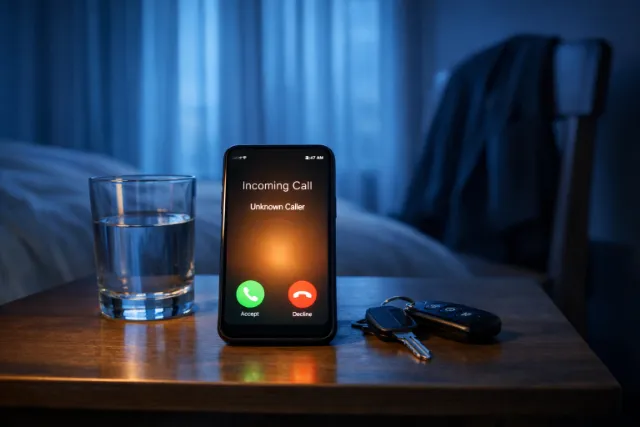

Every funeral starts with a phone call. For the family, it’s often the first time they’ve said the words out loud. For you, it might be the third call of the night.
Most firms have someone who handles that call beautifully. The question is whether everyone else does too: the part-timer, the new starter, the director covering at 2am. This guide is for all of them.
It’s written mainly for funeral homes in England, Scotland and Wales, where the funeral is usually a week or more away. In Ireland, and often in Northern Ireland, much more is settled on the first call. There’s a note on that below.
- Answer Your firm’s name and your own, said slowly.
- Listen Let them speak. Get their name and the name of the person who has died. Getting the tone right
- Reassure Tell them nothing needs deciding tonight.
- Ask the essentials Only what you need to bring the person into your care. What to askWhere it happened
- Agree what happens next When your team will arrive, and when you’ll call again. Before you hang up
Why the First Call Matters More Than Any Other
Families rarely remember the details of the first call. They remember how it felt. Were they rushed? Did the person on the phone use their mum’s name? Did they hang up knowing what would happen next?
Nobody remembers the wording of that call. They remember whether the voice was rushed and how it made them feel.Michael, founder of EverlyPro, in Funeral Service Journal
Get it right and the family arrives at the arrangement meeting already trusting you. Get it wrong and you spend that meeting trying to win them back.
Get the Tone Right Before the Details
The details matter, but the tone comes first. A few habits make the biggest difference:
- Slow down. Speak more slowly than feels natural. Pauses are fine.
- Use names. Ask for the caller’s name and the name of the person who has died, then use both.
- Let them talk. Some callers need to tell you what happened before they can answer a question.
- Drop the jargon. Words that are normal to you can sound cold to a family.
| Instead of | Try |
|---|---|
| “The deceased” or “the body” | Their name, or “your mum” |
| “We’ll do the removal at eleven.” | “Our team will come to bring him into our care at about eleven.” |
| “Who’s the next of kin?” | “Are you the best person for us to keep in touch with?” |
| “Has the death been verified?” | “Has a doctor or nurse been to see her yet?” |
| “What sort of budget are you thinking?” | “We’ll go through options and costs together when we meet.” |
What to Ask Now, and What Can Wait
The first call has one job: to bring the person safely into your care and leave the family feeling looked after. Everything else can wait for the arrangement meeting.
- The caller’s name, relationship and best number
- The full name of the person who has died, and what they were known as
- Where they are now, and anything the team should know about access
- Whether a doctor, nurse or paramedic has confirmed the death
- Whether the death was expected, and if the police or coroner are involved
- Any faith or cultural customs, especially around timing
- Any wishes about jewellery or personal items
- Whether the family would like time with them before your team arrives
- Burial or cremation
- Dates and venues
- Budget and costs
- Funeral plan details
- Music, readings and flowers
- Death notices
- Paperwork and registration
A note for Ireland and Northern Ireland
Where the funeral usually takes place within a few days, and the death notice often goes on RIP.ie the same day, much of the “can wait” list is settled on the first call or soon after: reposing, church and burial times, and the notice itself. The tone and the essentials still apply. The call is simply longer, so it matters even more that one person records it all in one place.
Two questions deserve extra care. If you need to know about stairs, narrow hallways or whether extra hands might be needed, ask it simply: “Is there anything our team should know before they arrive?” And if the family has customs that affect timing, find out now. Some faiths, including Islam and Judaism, ask for burial as soon as possible, and a delay you didn’t know about is hard to put right. Our guide to cultural competency covers this in more depth.
Where the Death Happened Changes the Call
The questions are mostly the same, but the shape of the call isn’t.
If the death was sudden or unexpected
The police will usually attend, and the coroner (the Procurator Fiscal in Scotland) will decide what happens next. In some areas, the coroner’s own contracted firm makes the first collection. If that might happen, explain it gently so the family isn’t surprised. Our guide to the coroner system explains the process in each jurisdiction.
What Every Caller Should Hear Before You Hang Up
The end of the call matters as much as the start. Before you say goodbye, make sure the caller has heard five things:
- Your name, and that your firm will look after them
- When your team will arrive, and that they’ll call when they’re on their way
- That nothing needs deciding tonight
- When you’ll call next, and who will call
- That they can ring this number at any hour
Families who want to know more can be pointed to a simple guide. Ours, What Funeral Directors Wish Every Family Knew, is free to share.
Write It Down Once
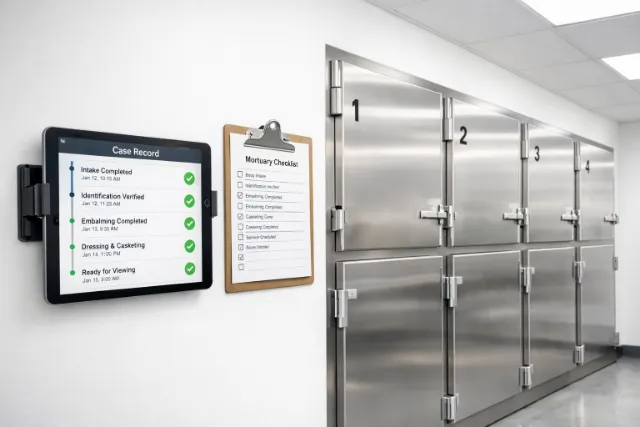
The details from the first call are needed again and again: by the team collecting, at the arrangement meeting, on forms and in your chain of custody record. When they’re scribbled on the back of an envelope at 2am, they get copied out, retyped and sometimes lost.
- Record it as you go, not from memory afterwards.
- Use the same form every time, so nothing is skipped on a busy night.
- Keep it in one place, so the next person picks up where you left off.
- Note what you promised, especially the arrival time and the next call.
Whether that’s a paper first-call sheet or case management software, the rule is the same: write it down once, and make it the start of the case. In EverlyPro, the first call opens the case, so everything taken on the phone is already there for the arrangement meeting.
Night Calls and Cover Staff
Most first calls that go wrong happen outside office hours, taken by someone who doesn’t usually answer the phone. A few simple habits close the gap.
- Keep the script by every phone, including the on-call mobile.
- Train everyone who might pick up, part-timers included.
- Check your answering service. If calls go to one out of hours, make sure they use your firm’s name, take the same details and pass them on straight away. Ring it yourself now and then.
- Agree a callback time and keep it. A call returned when you said it would be builds more trust than anything you say on it.
Being on call is hard on staff as well as families. Our piece on the 24/7 on-call reality covers how to make rotas fairer and safer.
A First-Call Script and Checklist
Keep this by every phone. It isn’t meant to be read word for word. It’s there so nobody has to remember everything at 2am. The printable version adds a fill-in sheet for taking the details down.
- Caller: name, relationship and best number
- Person who has died: full name, and what they were known as
- Where they are now, with any access notes
- Death confirmed by a doctor, nurse or paramedic? Who?
- Expected? Police or coroner involved?
- Faith or cultural customs, especially timing
- Any wishes about jewellery or personal items
- Time with them before the team arrives?
- Arrival time given to the family
- Next call: when, and who
The first call is short, but it’s the one every family remembers. Make sure everyone who answers your phone can give them the same calm, unhurried start.
Next comes the meeting itself. Our guide to the arrangement meeting covers what to prepare, what to cover in what order, and what families should take home.
Frequently Asked Questions
What should a funeral director ask on the first call?
Only what you need to bring the person into your care: the caller’s name, relationship and number; the full name of the person who has died; where they are now and any access notes; whether a doctor, nurse or paramedic has confirmed the death; whether it was expected and if the police or coroner are involved; any faith or cultural customs around timing; any wishes about jewellery; and whether the family would like time with them first.
What shouldn’t you ask on the first call?
In the UK, leave costs, dates, burial or cremation, music, notices and paperwork for the arrangement meeting. In Ireland, and often in Northern Ireland, where the funeral is usually within a few days, more of this is settled on the first call or soon after.
How should a funeral director answer the phone?
Say your firm’s name and your own, slowly. Ask for the caller’s name and the name of the person who has died, then use both. Tell them early that nothing needs deciding tonight.
What should a family hear before the first call ends?
Your name, and that your firm will look after them; when your team will arrive; that nothing needs deciding tonight; when you’ll call next, and who will call; and that they can ring at any hour. Read the arrival time and the next call time back to them.
Who should answer first calls at night?
Anyone on duty can, as long as they’ve been trained and have the same script and checklist in front of them. If calls go to an answering service out of hours, check that it uses your firm’s name, takes the same details and passes them on straight away.