Forty-seven per cent of UK adults now say they’d prefer a celebration of life over a traditional funeral. That is nearly half the market, and it reaches well beyond the non-religious. Through surveys, through arrangement conversations, through the services they plan for themselves, families are telling the industry they want something different from what most funeral homes default to.
Yet many directors still treat the celebration of life funeral as a side request. Something to accommodate when a family insists, rather than a core part of their offering. That gap between what families want and what funeral homes are structured to deliver is where the strategic question lives.
This post won’t argue that you should change. It sets out the three realistic positions available to you, the trade-offs attached to each, and where the market is likely heading regardless of what any of us prefers.
What “Celebration of Life” Actually Means in Practice
Before choosing a position, it helps to define what we’re talking about - because “celebration of life” covers an enormous range.
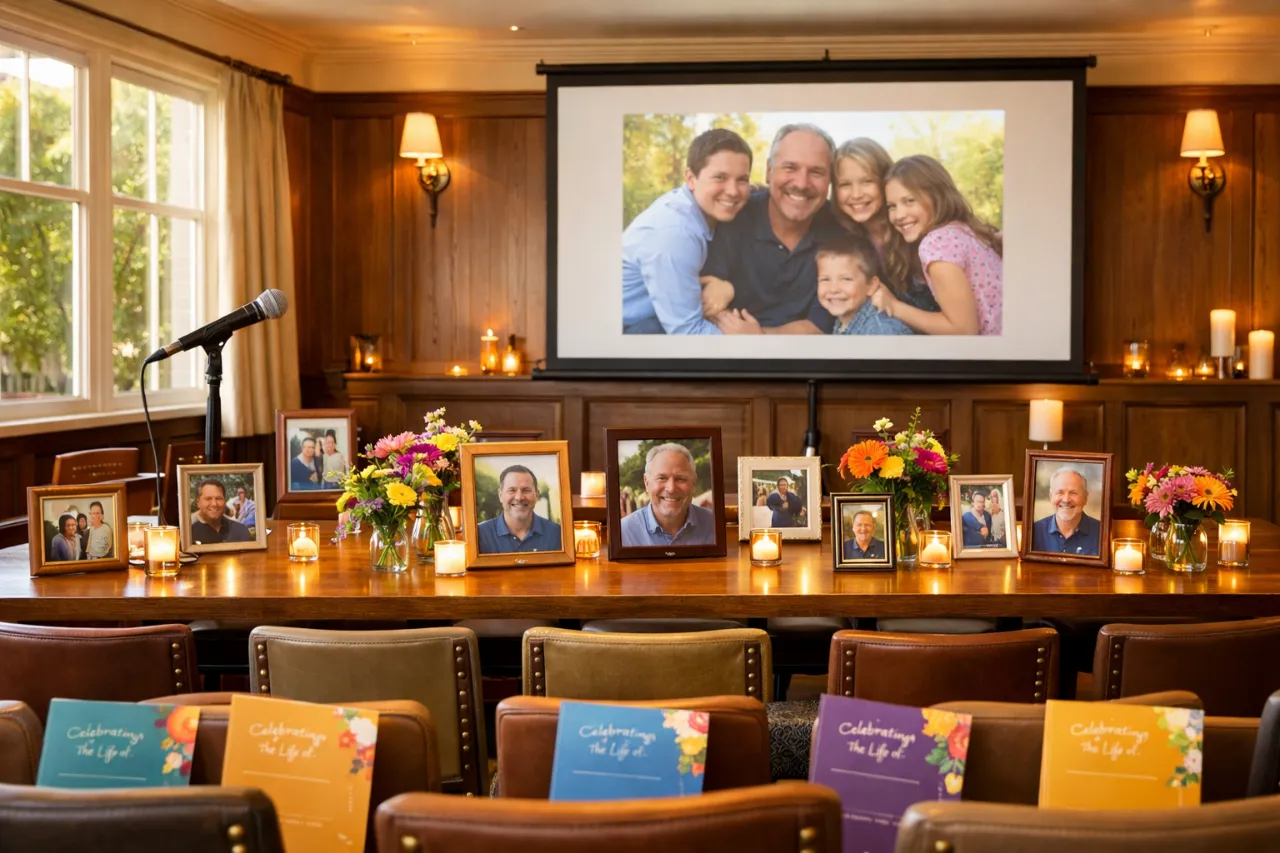
At one end, it’s a traditional funeral service with personal touches: a favourite song, a photo slideshow, coloured coffin linings, grandchildren reading poems. Most directors already offer this, even if they don’t label it a celebration of life. At the other end, it’s a fully non-traditional gathering with no coffin present, no hearse, no formal structure - a party at a pub, a gathering in a garden, a beach ceremony with scattered ashes.
Most families fall somewhere in the middle. They want warmth and personality, but they also want someone competent organising it. They don’t want to feel like they’re at a funeral home - but they do want to feel like someone is in charge.
Understanding that spectrum matters, because each position below serves a different slice of it.
The Three Positions
Position One: Become a Celebration of Life Specialist
This means going all in. Non-traditional venues - pubs, gardens, community halls, sports clubs, hotel function rooms. Themed services built around the person rather than a liturgical template. Multimedia tributes, curated music, interactive elements. Flexible scheduling that isn’t anchored to crematorium slot availability. Partnerships with independent celebrants, event planners, caterers, florists who work outside the funeral supply chain.
Some directors have built thriving businesses on exactly this model. They market differently, price differently, and attract families who would never have walked into a traditional funeral home. Their arrangement conversations feel more like event planning than bereavement support - and for many families, that’s precisely the point.
The trade-offs are real. You’re investing in competencies that sit outside traditional funeral directing. Venue logistics, AV equipment, catering coordination, entertainment booking - these are event management skills. Staff who excel at traditional funeral care may struggle with (or resist) the shift. Your professional identity changes, and not every director is comfortable with that.
There’s also a pricing question. Celebrations of life range from very affordable to very expensive, but families often expect more for less because there’s no hearse, no chapel of rest, no formal procession. Communicating the value of coordination, expertise, and emotional labour - when the visible trappings of a funeral are absent - requires a different kind of conversation with families.
And you may find yourself competing not with other funeral homes, but with event planners and families who decide to do it themselves.
Position Two: Offer Celebrations as One Option Among Several
This is where most funeral homes will land, and there’s nothing wrong with that - provided you do it properly.
You list celebration of life services alongside traditional funerals, direct cremation, religious services, and other options. You train your staff to have genuine conversations about personalisation. You build relationships with a few good celebrants. You create a portfolio of what’s possible - photos, testimonials, examples - so families can see that you mean it.
The advantage is breadth. You serve the 47% who want celebration and the 53% who want something else. You don’t alienate families who value tradition. You don’t bet the business on one model.
The trade-off is depth. Families who truly want a non-traditional experience can tell the difference between a funeral home that’s built for it and one that’s bolted it on. If your chapel of rest doubles as the “celebration space” with fluorescent lighting and plastic chairs, the offering feels half-hearted. If your staff visibly tense up when a family mentions a Viking-themed send-off, trust evaporates.
When you explain funeral options to families, a celebration of life should feel like a genuine choice, not a footnote. Families are perceptive. They know when an option exists on paper but not in practice.
The risk is mediocrity - doing celebrations well enough that families don’t complain, but not well enough that they recommend you.
Position Three: Stay Traditional and Own It
Some directors read the 47% statistic and feel a knot in their stomach - not because the number scares them commercially, but because they believe deeply in the value of formality, ritual, and solemnity. They’ve seen what a well-conducted traditional funeral does for a grieving family. They’ve held the space when nothing else could.
Owning the traditional position means being explicit about it. Not apologetic, not defensive - clear. Your website, your language, your arrangement conversations, your premises all communicate: we do this exceptionally well, and we believe in it.
Some families specifically want this. Families with strong religious faith. Families who’ve lost someone suddenly and need structure to hold onto. Families who distrust informality during grief. Older demographics. Communities where tradition carries cultural weight.
The trade-off is demographic. The preference for celebration of life is strongest among younger adults and those with no religious affiliation - two groups that are growing, not shrinking. A position that serves today’s 60-year-olds beautifully may not serve tomorrow’s. Funeral directors planning to operate for another twenty or thirty years need to consider which direction the curve is bending.
That said, there’s a version of this position that ages better than you might expect. Formality and quality never entirely go out of fashion. A director who can deliver a genuinely excellent traditional service - not a tired default, but something crafted and meaningful - will always have a market. The question is whether that market is large enough to sustain your business in your area.
The Complicating Factor Most Directors Miss
Here’s where the strategic picture gets more interesting - and more uncomfortable.
A growing number of celebrations of life don’t involve a funeral home at all. For directors wondering how to serve these families, our post on creating a meaningful memorial after direct cremation explores the standalone opportunity in detail. Here’s the pattern: The pattern works like this: family chooses direct cremation (now approaching 20% of all UK cremations), ashes are returned, and weeks or months later the family organises a memorial gathering. No funeral director involved. No arrangement meeting. No professional guidance.
For directors, this represents both a threat and an opportunity. The threat is obvious - if the celebration happens without you, you’ve lost that revenue and that relationship. The opportunity is less obvious but more important: families planning post-cremation celebrations often want help but don’t know where to find it. They don’t want to plan a funeral, but they also don’t want to plan an event while grieving. A director who positions themselves to serve these families - even when the cremation happened elsewhere - captures revenue and builds relationships that would otherwise evaporate entirely.
This means thinking about celebrations of life as a standalone service, not just an add-on to a funeral package. It means marketing to families who’ve already had the cremation. It means being findable when someone searches “how to plan a celebration of life” three months after their mother died.
Few funeral homes do this well. Most haven’t considered it at all.
The standalone opportunity
Celebrations of life after direct cremation represent one of the fastest-growing service gaps in the profession. Directors who position this as an independent offering - not bundled with a funeral package - can capture families who would otherwise never walk through the door.
The Irish Context: You’ve Been Doing This Longer Than You Think
For directors in Ireland, the celebration of life conversation lands differently - because Irish funeral culture already contains much of what the “celebration of life movement” claims to be inventing.
The Irish wake, with its storytelling, humour, food, drink, and community gathering, has always blended grief and celebration. Mourners share stories about the person - some reverent, some hilarious, some unprintable. Children are present. Neighbours bring food. Laughter and tears coexist without anyone finding it contradictory.
What’s shifting in Ireland isn’t the spirit of the send-off but the structure around it. Fewer families want the full religious funeral Mass. More want secular celebrants or humanist ceremonies. Venues beyond the church are gaining ground. But the underlying impulse - to honour someone’s life with warmth and honesty, not just solemnity - has been part of Irish tradition for generations.
Irish directors who recognise this have a genuine advantage. They’re not adopting something foreign; they’re evolving something familiar. The language of celebration doesn’t need to feel imported. It already belongs.
So Where Do You Stand?
There’s no clean answer here, and anyone offering one is selling something.
Your right position depends on your market - rural, suburban, urban; religious makeup; age profile; competition. It depends on your team - their skills, their willingness to adapt, their honest feelings about non-traditional work. And it depends on your own convictions about what a funeral director’s role should be.
What doesn’t work is ignoring the question. Forty-seven per cent is not a number that reverses. The families walking through your door in five years will want different things from the families walking through it today. Some will want what they’ve always wanted. Many won’t.
The directors who thrive won’t necessarily be the ones who picked the “right” position. They’ll be the ones who picked a position deliberately, built around it honestly, and stayed close enough to their families to know when the ground was shifting again.