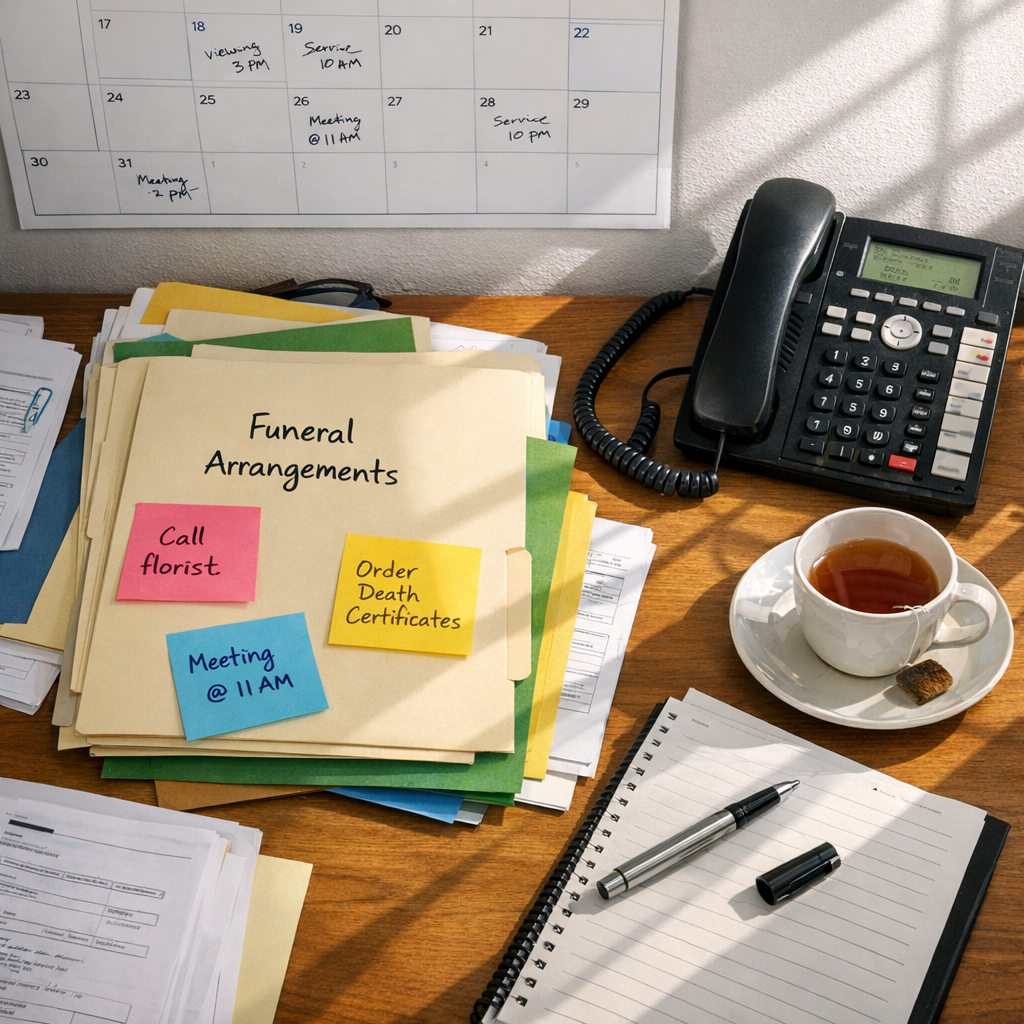
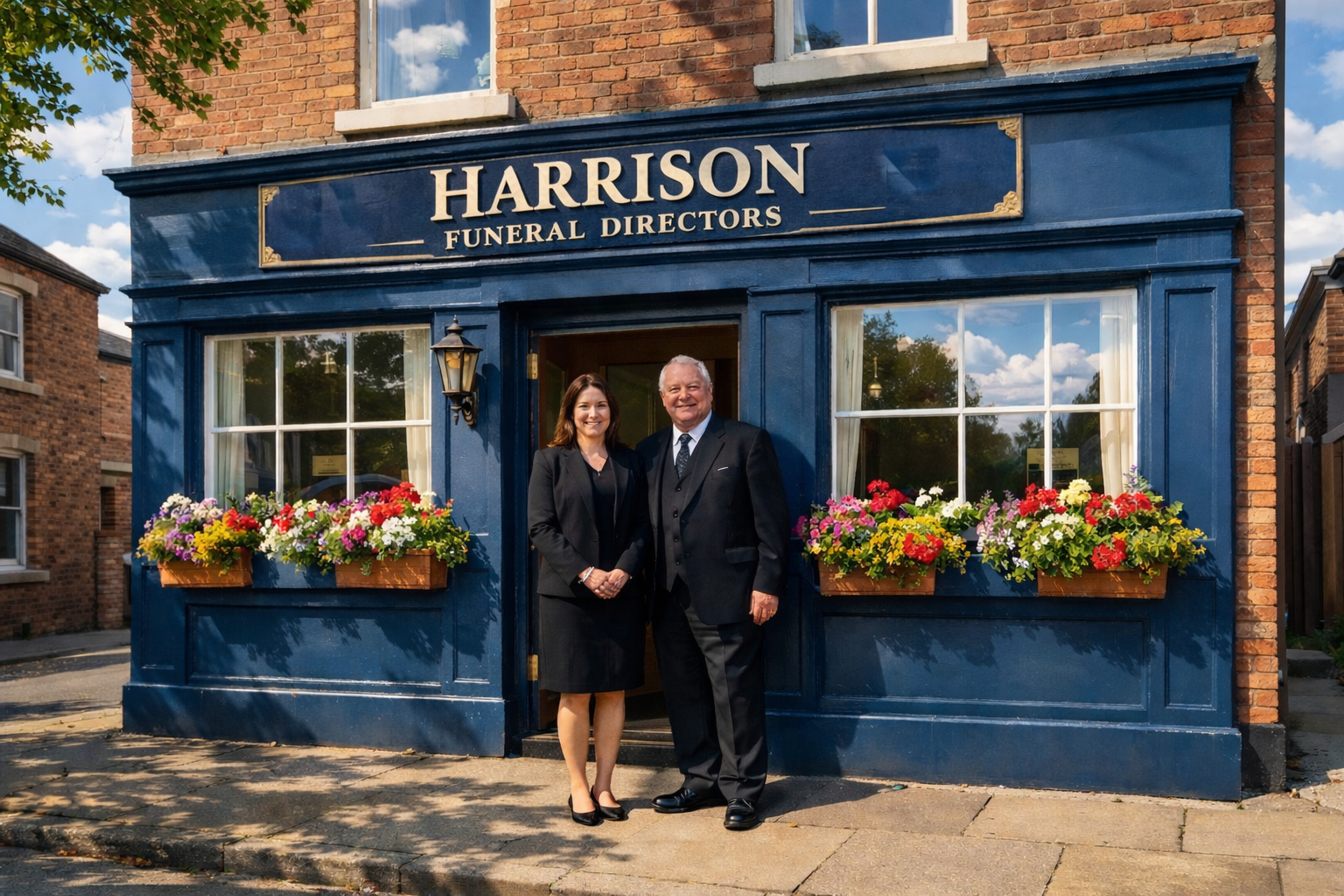
He’s sixty-three, and his knees remind him of it every time he walks down the stairs to the preparation room. He built this funeral home - or inherited it from his father and rebuilt it in his own image, which amounts to the same thing. Thirty-one years of night calls, thirty-one years of families who ask for him by name, thirty-one years of knowing every priest, every gravedigger, every coroner’s officer in the county.
He knows he should be thinking about what comes next. He’s had a vague conversation with his daughter about it - she works in marketing in Dublin, and she’s said she’d “consider it,” which could mean anything. A competitor three towns over was acquired by a consolidation group last year. The staff there are still adjusting. A letter from a private equity-backed outfit arrived last month, offering to “discuss the future of your business over coffee.” It’s sitting unopened in his desk drawer, underneath a stack of cremation forms.
Meanwhile, he did two removals last Tuesday night and his back seized on the second one. He’s not ready to stop. But his body is starting to make the argument for him.
This is funeral home succession planning in its most common form: avoidance.
Why This Keeps Getting Postponed
According to the NFDA, nearly half of US funeral home owners plan to retire within five years. The UK and Ireland picture is similar - an ageing ownership cohort, a wave of retirements approaching, and a striking lack of formal succession plans. The data crosses borders because the psychology is the same everywhere.
For many independent funeral directors, the business is something they are, not just something they own. Their name is on the building. Their reputation is the brand. Their phone number is the one families call at 2am. Stepping back from that doesn’t just mean retiring from a job. It means confronting questions about identity, relevance, and legacy - the same questions they help families process every week, now turned inward.
Name it honestly: this is hard. Not administratively hard, though that’s part of it. Emotionally hard. And because it’s emotionally hard, it gets deferred. Another year. Another year after that. Until the knees or the back or the chest pains make the decision for you, and the business you spent decades building is suddenly on the market under pressure rather than on your terms.
What Succession Planning Actually Means
The phrase “succession planning” sounds like it means one thing: find someone to take over. But it’s actually a set of distinct decisions, each with different implications.
Will the business stay in the family? This is the default assumption for many independent homes, especially those with a generational legacy. But “my daughter might take over” is a hope dressed up as a plan. And if the next generation inherits out of guilt rather than genuine desire, the business - and the relationship - suffers.
Will it be sold to an employee or management team? A management buyout keeps the culture and the team intact, but it requires financing, mentoring, and a long runway. The employee who’s brilliant at arranging funerals may not be ready to run a business.
Will it be sold externally - to another independent or to a consolidator? This secures a financial return but means accepting a loss of control. The new owners may change the name, the approach, the staff. For directors who built something personal, this can feel like erasure. Is Corporate Consolidation Killing the Independent Funeral Home?
Will it simply close? Nobody wants to say this one out loud. But some businesses are so dependent on their founder that an orderly wind-down, handled with dignity and proper notice to staff and families, is more honest than a forced sale at a discount.
Most owners haven’t thought past the first option. The ones who plan well think through all four.
The Valuation Wake-Up Call
Back to our director. He’s decided to start the process - or at least to stop avoiding it. He meets with his accountant to understand what the business is actually worth.
The number is lower than he expected.
Not because the funeral home isn’t busy. It is. Not because the revenue is weak. It’s decent. The problem is that the business is entirely dependent on him. His relationships with the clergy. His reputation in the community. His knowledge of how everything works, held in his head and nowhere else. The staff know what to do because he told them, not because there’s a procedures manual. The financial records are adequate for tax purposes but wouldn’t survive due diligence from a buyer. The scheduling system is a whiteboard in the back office and a series of text messages.
If he left tomorrow, the business would struggle within months. Not because the staff aren’t good - they are. But because the operational knowledge that holds everything together lives in one person’s memory.
This is the succession planning gap that rarely gets discussed. The business isn’t ready to be handed over because it was never built to operate without its founder.
The real issue
Most funeral home valuations fall short over transferability, not revenue. A business that depends entirely on its founder’s relationships and memory is worth significantly less than one with documented processes and empowered staff.
Making the Business Transferable
Here’s the practical core, and it applies whether you’re planning to transition in two years or twelve. A funeral home that can be sold, inherited, or handed to a management team needs:
- Documented standard operating procedures that exist independently of the owner’s memory. First call protocols. Arrangement conference workflows. Cremation paperwork checklists. Supplier contacts and account details. If a new person couldn’t pick up a case file and know exactly what to do next, the processes aren’t documented well enough. The Paperwork Black Hole - What Going Paperless Actually Looks Like in a Funeral Home
- Financial records that are clean, current, and transparent. Separated personal and business expenses. Clear revenue tracking by service line. Up-to-date accounts receivable. A buyer or successor needs to see exactly what the business earns and where the money goes.
- Staff who can manage cases independently. If every decision routes through the owner - every family meeting, every scheduling conflict, every supplier call - the business has a single point of failure. Delegation builds resilience rather than signalling abdication. And retaining the right people during a transition is half the battle.
- Client relationships that belong to the business, not just the owner. When families call back for a second bereavement, do they ask for the firm or for the person? Both answers are fine, but a transferable business needs the former to be true as well as the latter.
- A brand and reputation attached to the home, not solely the individual. Online presence, community involvement, consistent service quality - these build institutional trust that outlasts any single director.
None of these are radical changes. They’re good operational practice. They make the business run better today, not just more sellable tomorrow. A funeral home with documented processes, empowered staff, and clean finances is a better funeral home, full stop.
Three Paths, One Common Requirement
Our director has done the hard thinking. He’s looked at the numbers. He’s started documenting. Now he’s facing the decision.
Path one: his daughter takes over. She’s interested - genuinely, not just dutifully. But she has no experience running a funeral home. This path requires a structured transition: she comes into the business, works alongside him, learns the operations, builds relationships with families and clergy, and gradually assumes responsibility over two to three years. He needs to let go incrementally, and she needs to be given real authority, not just a title. The worst version of this is the founder who “retires” but still shows up every day and overrides every decision.
Path two: a management buyout. His senior arranger has been with the firm for fourteen years and knows the families, the community, and the work. But she’s never managed finances, negotiated supplier contracts, or handled regulatory compliance. A buyout needs a development plan - financial literacy training, gradual management responsibility, and a financing structure that doesn’t saddle the new owner with crippling debt. Some owners carry a portion of the sale price as a loan to make the numbers work. It’s worth the conversation.
Path three: an external sale. The letter in the drawer. The consolidator offering coffee and a conversation. This isn’t inherently bad - some consolidation groups operate acquired homes with genuine respect for local identity. Others strip them for efficiency. The difference matters enormously. An external sale requires good advisors (an accountant who understands funeral business valuation, a solicitor experienced in business transfers), a realistic timeline, and emotional honesty about what you’re willing to accept.
All three paths share one requirement: they need to start years before the transition, not months. A rushed succession - whether it’s a panicked handover to an unprepared family member or a fire-sale to the first buyer who calls - almost always destroys value. Time is the most important asset in this process, and it’s the one most owners waste.
Key takeaway
Whether you choose family succession, a management buyout, or an external sale, the lead time matters more than the path. Start the conversation two to three years before you want to step back - not two to three months.
The Letter in the Drawer
Six months later, our director hasn’t retired. He’s not close to it. But things have shifted.
He’s written down the processes he’s carried in his head for three decades. It took longer than he expected - turns out there’s a lot of institutional knowledge in the space between “I just know how we do it” and a document someone else can follow. His senior arranger is now handling two cases a week entirely on her own, from first call to final disposition. His daughter has started coming in on weekends, sitting in on arrangement conferences, asking sharp questions.
The accountant has done a proper valuation. The number is still lower than he’d like, but it’s higher than it was six months ago, because the business is starting to look like something that could function without him. That’s the point, not an insult.
The letter from the private equity group is still in the drawer. He might open it. He might not. He has options now, which is more than he had when the only plan was to keep going until he couldn’t.
There’s an irony that funeral directors know better than anyone: planning for an ending doesn’t hasten it. It just means that when the time comes - and it always comes - the people left behind aren’t scrambling. That’s true for the families they serve. It turns out it’s true for the businesses they build, too.